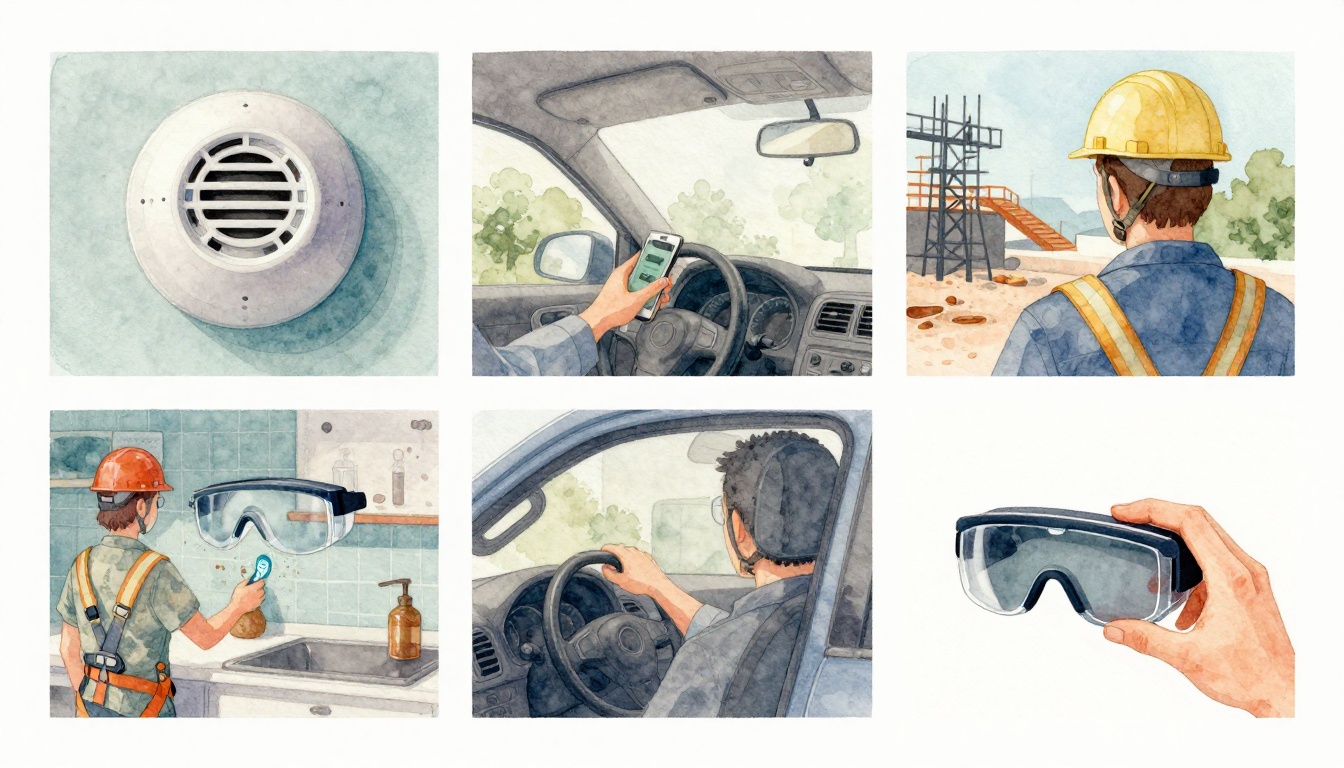
You grab your coffee, rush out the door, and hop into your car without a second thought. Yet, in 2025, OSHA issued 5,914 citations for fall protection alone, the top workplace violation for 15 straight years. These numbers hit close to home because common safety risks like that sneaky carbon monoxide leak or a quick phone glance while driving slip past us all the time.
We ignore them for good reasons. Cognitive biases whisper it won’t happen to you. Stress hits 90% of workers, and exhaustion drops safe choices. Fatigue ties to 51% of mistakes on the job. Picture this: a friend sprayed cleaner in her eye because she forgot to turn the can away. Simple oversight, but 2,000 workers suffer eye injuries daily from chemicals and more. Rushing through routines blinds us.
This post spotlights risks in your home, on roads and trails, at work, and with health tech. You’ll spot them fast and fix them with easy steps. Let’s start where you feel safest.
Sneaky Home Hazards Ready to Cause Trouble
Your home seems like a safe spot. Familiarity breeds neglect, though. Distractions pile up, and you skip checks. Carbon monoxide poisoning kills over 400 Americans yearly from non-fire sources. Electrical faults spark thousands of fires. Hot surfaces and chemicals burn without warning. These threats hide in plain sight because they lack alarms or smells.
Carbon Monoxide: The Gas You Can’t Smell or See
Carbon monoxide builds up from faulty furnaces or car exhaust in garages. It mimics flu symptoms: headache, dizziness, nausea. In 2022, 1,244 deaths occurred, with 624 accidental. Over 100,000 hit emergency rooms yearly.
Winter heaters boost risks because poor ventilation traps the gas. You blame a cold and push on. Detectors beep only if working. Test yours monthly. Replace batteries twice a year. Place one on every floor, near bedrooms. Install after fuel-burning appliances. These steps cut deaths sharply.
For example, a family felt sick all season until a new detector saved them. Small habit, big payoff.

Electrical Fires Sparking from Cords and Heaters
Frayed cords and overloaded outlets start quietly. Space heaters topple onto rugs. You plug in extras for “just a minute” and forget. Yearly inspections reveal cracks or wear.
Overloaded extensions melt insulation. Heaters need three feet of clearance. Unplug when leaving rooms. Replace damaged plugs right away. These rules prevent most home fires.
One stat shows portable heaters cause many winter blazes. Check cords by bending them gently. No frays? Good. Still, unplug unused ones.
Hot Surfaces and Chemicals Causing Surprise Burns
Air fryers hit 500 degrees Fahrenheit inside. You dip a hand cleaning it hot. Chairs warm from sun bake skin. Chemicals splash eyes when cans face wrong.
NIOSH notes 2,000 daily worker eye injuries, many chemical. Home mishaps mirror this. Wear goggles for sprays. Let surfaces cool 30 minutes. Label bottles clearly.
Double-check heat with a thermometer. Test chairs by touch first. Goggles cost little but save sight.
Road and Trail Dangers You Drive Right Past
Overconfidence rules roads and paths. “I’ve done this a hundred times,” you think. Phones distract. Ice hides. Ladders wobble outdoors. NHTSA logged 3,275 distracted driving deaths in 2023.
Habits and tech fool you. Slow down. Inspect gear. Lives depend on it.
Phone Glances Turning Drives Deadly
A text seems quick. Hands-free talks multitask poorly. Cyber features in cars add pings. Distraction caused 397 cellphone deaths in 2023.
You glance and swerve into objects. 779 deaths tied to contact crashes. Pull over for calls. Silence notifications. Apps track focus; use them.
Deepfakes trick even more now. Verify before reacting.
Ice and Uneven Paths Catching You Off Guard
Black ice sends cars sliding in winter. Trails hide roots or mud. OSHA cited 2,405 ladder violations in 2025; outdoors adds scaffolding slips at 1,905.
Chains grip tires. Slow to 30 mph on ice. Inspect ladders for bent rungs. Outdoors, clear paths first.
Hikers trip on brush yearly. Boots with treads help. Check weather apps before heading out.

Workplace Warnings Everyone Tunes Out
Routines dull senses at work. “It won’t hit me,” you say. OSHA’s 2025 top violations prove otherwise. Falls led with 5,914 citations. Ladders followed at 2,405. Hazard communication hit 2,546; machine guarding 1,239.
Stress exhausts 90% of workers. 80% see quality drop. Employers fail, but your habits count. Use gear. Speak up.
Falls and Ladder Slips from Heights You Dismiss
Low heights kill most. Six feet drops fracture skulls. OSHA notes construction tops lists.
Guardrails block edges. Harnesses tie you safe. Pick ladders by job: right angle, weight rating.
Inspect rungs daily. Damaged ones snap mid-climb.
Chemical Labels and Machine Guards You Skip
Missing labels hide acids. Workers skip goggles; 1,665 eye protection citations in 2025.
Read SDS sheets. Train on hazards. Guards prevent pinches; 1,239 violations show risks.
Disable them for speed? Never. Report gaps to bosses.
Health and Tech Traps Fooling Your Judgment
Tech promises perfection. Health pains get shrugged off. Medication labels confuse. AI diagnoses miss biases. Phishing steals data.
Overtrust and “tough it out” attitudes rule. 85% ignore pains; under 5% report. Stress worsens it. Double-check. Verify sources.
AI and Med Mix-Ups in Hospitals and Apps
Shortages scramble labels. AI skips human checks. Gender gaps delay pain care for women.
Confirm doses twice. Ask pharmacists. Report odd app advice.
Hospitals crowd; errors rise. Vaccinations dip from distrust.
Phishing Scams and Unreported Aches Costing Big
Emails mimic bosses. Deepfakes call. Losses hit billions.
Hover links first. Verify callers. Report aches early; delays worsen.
Small checks block $308 billion scams.

You now see carbon monoxide, road slips, falls, and tech traps clearly. Biases, stress, and habits blind us, but awareness flips that.
Start small. Test your CO detector today. Check that ladder tomorrow. These steps shield you and family.
Share your overlooked risk below. What habit will you change first? Safe days ahead.