
Picture this: You’re strolling home after a late dinner, eyes glued to your phone, earbuds in. Footsteps quicken behind you. You glance back just in time to dodge a sketchy shadow, heart pounding.
Even though aggravated assaults dropped 9% in major U.S. cities last year, nearly half of Americans (49%) now rely on security cameras at home. They feel the need because past scares linger. That’s where basic habits for personal safety come in; they build a sharp mindset without gadgets or guns.
You’ll pick up simple routines for situational awareness, home setups, street smarts, digital shields, and self-defense basics. These steps empower you to stay safe every day. Which habit will you try first?
Build Rock-Solid Situational Awareness in Your Daily Routine
You spot trouble before it spots you. That’s the power of situational awareness. Experts rank it as your best defense because it keeps you present and ready. Phones steal your focus, so ditch them first. Scan new areas next. Walk with purpose, and trust that gut feeling when something seems off. Practice these daily, and they become automatic. In short, consistency builds autopilot safety.
Ditch Distractions to Keep Your Senses Sharp
Phones blind you to real threats. You miss the guy tailing you or the car slowing down. Distracted walking boosts risks, even if assault stats lag behind. For example, in 2023, distracted drivers killed over 600 pedestrians and cyclists. Scrollers cross streets unsafely and ignore dangers around them.
Put your phone away before you move. Use hands-free calls instead. Set no-phone zones like walks to the car or store runs. These habits sharpen your senses fast.
Take Sarah’s story. She left a coffee shop, eyes on her screen. A man bumped her hard, grabbing her bag. But her friend, phone-free, yelled a warning. Sarah yanked back and ran to safety. That alertness saved her purse and peace of mind.

Build this habit now. Your eyes and ears stay open. Threats lose their edge.
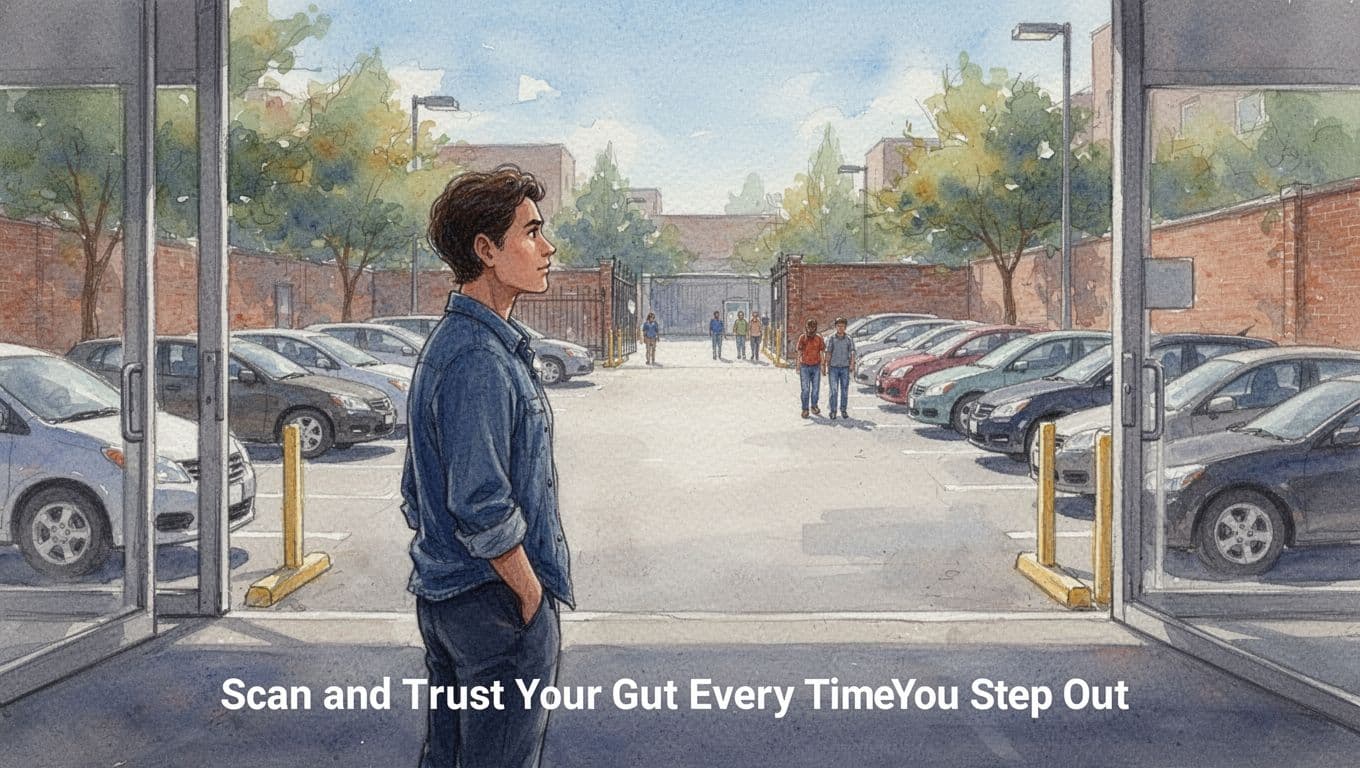
Scan and Trust Your Gut Every Time You Step Out
Pause and observe first. Check parking lots for loiterers. Glance down alleys. Note people nearby and exits behind you. This “observe first” scan takes seconds but spots baselines.
Trust hunches too. They flag odd vibes before your brain catches up. Avoid that sketchy shortcut if it feels wrong. One woman skipped a dark path after seeing a parked van with tinted windows. Later, police found it tied to a robbery ring. Her gut steered her right.
Practice with family. Verbalize what you see: “Blue truck idling, two guys chatting by the door.” It trains your eye and shares intel.
Here are quick daily drills to sharpen skills:
- Count doors and windows in any room you enter.
- Note colors and makes of five cars in a lot.
- Spot three exits wherever you go.
- Describe strangers aloud: height, clothes, direction.
Do these often. They turn scanning into instinct. You stay ahead because you notice what others miss. For more on phone-free awareness, check ITS Tactical’s tips on staying alert.
Walk tall next time. Head up, eyes moving. Safety follows.
Lock Down Your Home with Easy Everyday Checks
Your home needs the same attention as your daily walk. Burglaries keep falling into 2026, down 19% in early 2025 alone, yet one hits every 30 seconds. Most target unlocked doors or windows. Experts stress layered protection: lock everything, every time. These routines stop easy entries and cut risks by hundreds of percent. Involve your family too. Review emergency plans monthly over dinner. Simple checks build a fortress without fancy gear.
Make Locking Up Second Nature, No Exceptions
Double-check doors and windows each day. Do it before bed and when you leave, even for a quick trip to the mailbox. Burglars love unlocked spots; 34% hit front doors, 23% windows. Locks force them to work harder, deterring over half.
Make it stick with hacks. Attach a keychain tag that says “Locked?” Or set a phone app nudge at sunset. My neighbor Tom tried this after forgetting once. A prowler tested his back door that night, but the deadbolt held. No break-in. Police later linked the guy to three nearby hits.
Families thrive on this too. Gather kids weekly. Walk the house together. Point out weak spots. One mom shared how her teen spotted a loose window latch during a drill. They fixed it fast.
Try this quick checklist before outings:
- Front and back doors: deadbolt engaged.
- Ground-floor windows: latched tight.
- Garage door: down and secured.
- Patio sliders: pinned or locked.
Routines like these make homes 300% less likely targets. For proven strategies, see Alarm Reviews’ 2026 burglary prevention guide.

Lock up today. Peace follows.
Guard Your Privacy and Vet Every Visitor
Oversharing online invites trouble. Skip posts about vacations or empty houses. Burglars scout social media for routines. Post after you return instead.
At the door, stay smart. Ask “Who is it?” through the wood first. Peek via peephole or camera. Delay opening; chain it on. Verify service folks with companies directly.
Upgrade basics with smart locks if you want. They log access and alert your phone. But start simple. One family ignored a knock during dinner. Peephole showed a fake plumber. They called police; turns out he cased the block.
Teach kids too. Role-play scenarios. “Mom, package guy?” Practice: check ID, don’t rush.
Handle visitors this way:
- Voice confirm first.
- View through peephole.
- No ID? No entry.
- Call to verify pros.
These steps guard privacy tight. Check SafeWise’s home security checklist for more family tips.

Vet everyone. Your home stays yours.
Master Street Smarts for Safe Walks and Travel
Streets demand respect. You boost safety with smart choices on paths and posture. Pedestrian deaths fell 11% in early 2025, yet night walks carry high risks; 82% of fatal crashes hit in dark hours. Skip isolated spots. Group up for commutes or runs. Plan routes ahead. These habits cut threats fast, so you arrive calm.
Choose Smart Paths and Move with Confidence
Stick to well-lit areas always. Bright streets under lamps draw eyes and deter trouble. Avoid shortcuts through alleys or parks after dark; they hide risks. One night-out example sticks out. A woman left a bar alone. She eyed a dim path home but chose the longer lit sidewalk instead. Her purposeful stride kept her safe; a mugger later hit that alley.
Walk tall because it signals strength. Keep your head up, shoulders back. Swing arms naturally, hands free. This body language scares off predators who pick easy targets. Studies show confident walkers face fewer approaches.
For night runs or commutes, try these tips:
- Map lit routes on apps before you go.
- Face traffic if no sidewalk exists.
- Cross at signals; skip jaywalking.
- Join a buddy or group for extra eyes.
A runner dodged assault last year by striding bold past loiterers. They backed off quick. Practice this daily. You own the street then. See walking safety tips for confidence from experts.

Confidence turns walks into wins.
Stay Connected and Hide What Thieves Want
Share your spot real-time with trusted folks. Apps like Life360 lead for this; they track location in private circles and send arrival alerts. Perfect for night walks or group trips. Google’s Personal Safety app adds SOS shares too. Turn it on before you head out, then off after.
Hide valuables next. Wear bags cross-body over your chest; thieves struggle to snatch them. Slip your phone in a front pocket, not your hand. This keeps it low-key and ready. Ditch flashy jewelry or wads of cash.
One commuter learned hard. She clutched her purse on a bus. A pickpocket bumped her anyway. Now she crosses it tight and pockets her phone. No losses since.
Quick rules keep thieves away:
- Share live location for check-ins.
- Use anti-theft bags with hidden pockets.
- Phone stays pocketed until needed.
- Scan for tails every block.
These steps shield you without fuss. Life360 cuts worry on commutes because friends watch your route. Stay linked, stay safe.

Shield Your Digital World from 2026 Scams and Hacks
Online threats hit hard these days. Phishing tops FBI complaints, and data breaches jumped 40% globally in 2026. US losses from cybercrimes topped $16 billion last year alone. Hackers steal identities every two seconds with ransomware and AI tricks. You don’t need tech wizardry to fight back. Basic habits lock down your accounts and spots fakes fast. Start today, and scams bounce off you.
Turn On Extra Logins and Skip Shady Links
Passwords alone fail often. Add multi-factor authentication (MFA) everywhere for that extra lock. It asks for your phone code or app approval after the password. Even if crooks snag your login, they stop cold.
Turn it on with these plain steps:
- Log into your account settings, like email or bank.
- Find the security section and pick “two-step verification” or MFA.
- Choose your method: app like Google Authenticator, text code, or hardware key.
- Scan the QR code or enter your phone number.
- Test it with a login; enter the fresh code right away.
Apps such as Microsoft or Google push notifications too. Set them up first on major sites: email, banking, social media. For details, check StaySafeOnline’s MFA setup guide.
Phishing emails fool most because AI writes them smooth now. Spot them quick with “stop-think-report.” Stop before you click. Think: Does it demand urgent action, like “Wire money now or lose access”? Odd sender seals it, even if the name looks right. Check the full email address; fakes slip up there.
Other red flags include bad grammar in links or pleas for personal info. Hover over buttons; real sites match the URL. Forward suspects to your IT team or sites like reportphishing@apwg.org. One user dodged a bank scam last month by pausing on the “act fast” line from a weird domain.

Make MFA your default. Phishing loses power then.
Secure Wi-Fi and Devices Without the Hassle
Public Wi-Fi tempts hackers to snoop. Coffee shop nets expose logins like open mail. Grab a VPN app instead; it scrambles your traffic. Pick one with a kill switch that cuts internet if the VPN drops. Turn it on before connecting anywhere sketchy. Skip banking or shopping without it.
Keep devices fresh too. Enable auto-updates for phones, laptops, and apps. They patch holes hackers love. Most run in background, so check weekly: Settings > Software Update > Install now.
Build a password habit next. Use a manager like LastPass or Bitwarden for strong, unique ones per site. Review them Sundays: change weak ones, test recovery codes. One forgetful guy caught a breach early because his manager flagged an old reuse.
Follow these for smooth security:
- VPN always on public spots.
- Auto-updates toggled yes.
- Weekly password scan in your vault.
Public Wi-Fi risks drop huge with this. See PrimeWay’s public Wi-Fi safety tips for more. Your digital life stays private and tough.
Get Ready for Self-Defense Without Fancy Training
Awareness spots trouble early, but you need quick action next. Basic self-defense skips classes or gear. Less-lethal tools like pepper spray stop attackers 85-92% of the time, per 2026 stats. Run first, fight smart if trapped. These habits build confidence fast. Families stay safer with monthly plan reviews too.
Carry Everyday Items That Pack a Punch
Keep keys handy between your fingers for jabs if grabbed. They work as improvised tools without training. Pepper spray leads next; it’s legal in all 50 states for adults, though sizes cap at 2-4 ounces in spots like New York. Check local rules before carrying.
Clip it to keys or a cross-body bag. Practice the grip at home so it feels natural. One woman faced a mugger last year. She sprayed from five feet, dropped him yelling, then ran to lights. Police praised her choice; no harm done.
Hide it smart to avoid notice. For concealment ideas, see Byrna’s guide to legal pepper spray carry.

These tools empower you because they’re simple and close by.
Build Speed, Strength, and a Fighter’s Mind
Stay fit for bursts of power. Run or fast-walk three times weekly to flee fast. Add push-ups, squats, and planks for pushes or kicks. Everyday lifts like groceries build real muscle too. Fit folks resist better; resistance cuts risks huge.
Mindset matters most, though. Yell “Fire!” or “Back off!” to draw eyes and stun foes. Visualize responses daily: breathe slow, run first. One dad prepped his family this way. When a break-in loomed, they yelled and bolted; intruder fled empty-handed.
Review plans monthly over dinner. Practice yells and escapes. Experts say basics like these work without pro training. Check UW Medicine’s self-defense tips for more.
You handle threats calm now. Safety sticks.
Conclusion
You started with that late-night walk, phone in hand and senses dulled. Now picture yourself alert, scanning ahead, locks checked, and streets owned. Situational awareness sharpens first, home checks layer defense next, street smarts guide paths, digital habits block scams, and self-defense tools wait ready.
Start small because big changes stick that way. Pick one habit per week, like ditching phone distractions today. Build them steady, and they turn automatic.
Grab two habits right now. Share them with family over dinner, then comment below: which one clicks for you? Sign up for my newsletter too; you’ll get fresh safety tips straight to your inbox. Small shifts like these deliver big protection in our 2026 world. Stay sharp out there.