
Cooking fires spark about 170,000 times a year in US homes. They cause thousands of burns and hundreds of deaths. Meanwhile, bathrooms see over 235,000 injuries annually, with 80% of older adult falls happening there.
These spots feel safe, but wet floors and hot stoves turn deadly fast. You can fix most issues with quick changes. Simple steps cut fire, fall, and burn risks right now. They bring peace of mind and protect your family.
This guide covers kitchen fire prevention, bathroom slip stops, and extra habits. Start today for a safer home.
Tame Kitchen Hazards to Avoid Fires and Burns
Kitchens lead in home fires because cooking tops the list. Unattended stoves cause 37% of them. Hot pots spill on kids often too. Sharp knives and cleaners add poisoning risks.
You fix this with basic rules. Stay near the stove always. Turn pot handles inward. Kids stay three feet away. These moves slash dangers fast.

Keep a fire extinguisher handy for grease blazes. Smoke alarms save lives, so test them monthly. Set your water heater to 120 degrees Fahrenheit. This stops scalds from sinks or spills.
Real life shows why. A mom turned away for a phone call. Her toddler grabbed a pot handle. Burns followed. Back burners and inward handles prevent that every time.
Clean grease buildup often. It fuels fast fires. Short sleeves help too. No loose clothes near heat.
Smart Stove Habits That Stop Fires Before They Start
Unattended cooking starts most kitchen blazes. People leave for “just a minute.” Fires spread in seconds.
Stay in the kitchen while frying or boiling. Use a timer if baking. Check often. Turn off burners before stepping out.
Pot handles cause pulls, especially by kids. Turn them toward the stove’s center. Use back burners first. Oven mitts protect hands; keep them close.
Microwaves need care. Never run empty or with metal. Wipe spills right away.
For more on these habits, check Texas cooking safety tips. They match NFPA advice.
Grease fires need lids, not water. Slide a cover over the pan. Turn off heat. A fire blanket works great too.
Kids get 30% of cooking burns from tipped pots. Keep them back. Pets too. This simple rule works.
LED candles beat real ones. No open flames means fewer starts.
Keep Knives, Meds, and Cleaners Out of Harm’s Way
Kids under four face high poisoning risks. Cleaners and meds tempt them.
Store everything in locked cabinets. High spots work best. Original containers prevent mix-ups.
Knives go up high or locked. No drawers kids reach.
Check the room before kids enter. Visual sweeps catch loose items.
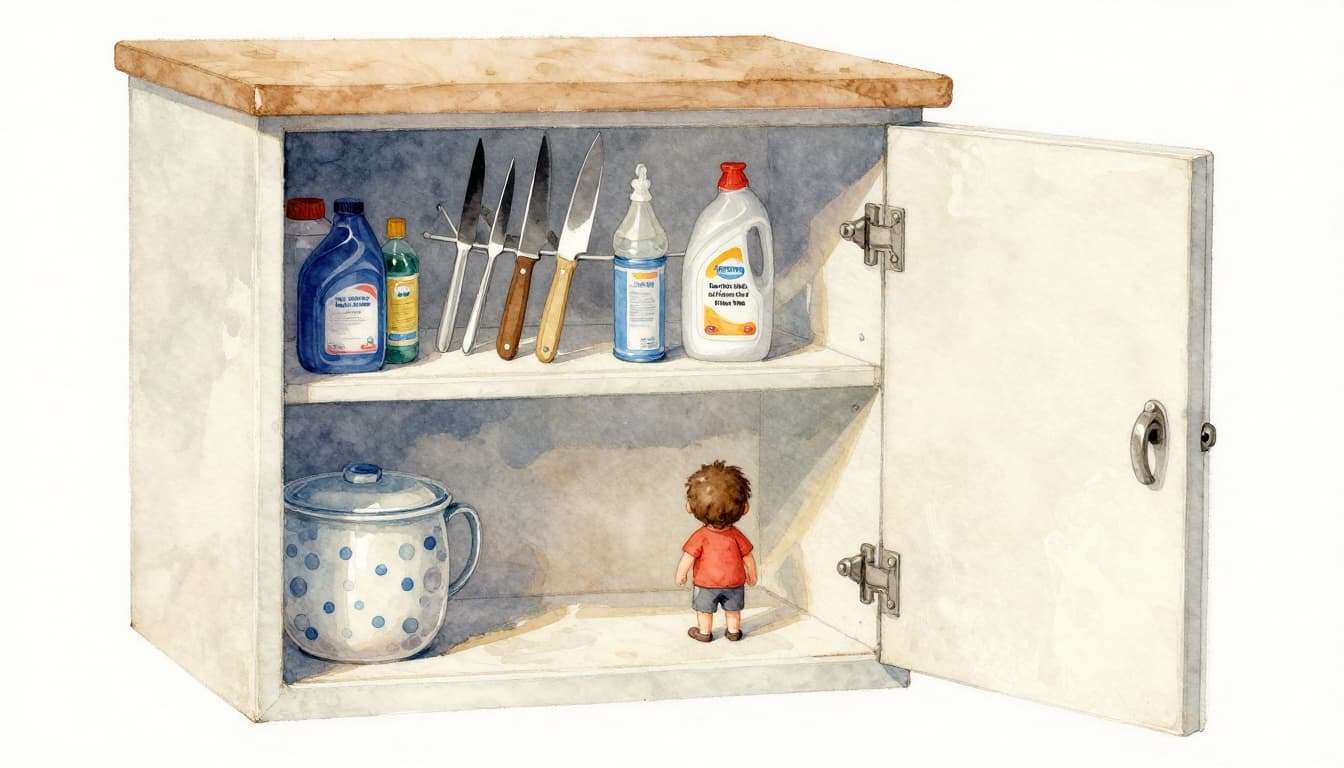
These steps cut poisoning cases big time. One locked door blocks most trouble.
Never mix bleach and ammonia. Toxic gas forms fast. Read labels always.
Turn Your Bathroom into a Fall-Free Zone
Falls kill in bathrooms. Seniors see 80% of theirs there. Half of home accidental deaths tie to slips.
Wet floors from showers cause most. Tub edges trip people. Hot water shocks lead to jerks and falls.
Dry floors first. Add non-slip mats outside tubs. Rubber mats inside grip feet.
Grab bars in wall studs hold weight. No suction kinds; they fail.
Clutter free floors help all ages. Sturdy stools beat wobbly ones.
Over 235,000 injuries happen yearly. Quick fixes change that.

Seats or hoists aid elderly. Medical alerts summon help fast.
Grip and Grip More: Install Bars and Mats That Work
Slippery rugs fly out. Post-shower falls send folks crashing.
Choose non-slip mats with rubber backs. Place one inside and out of the shower.
Grab bars near toilets and tubs save balance. Screw into studs for strength. Test by pulling hard.
For full placement guides, see this grab bar installation overview for seniors.
Step stools with grips reach high shelves safe. No folding chairs.
Stair gates block kids from bathroom stairs if near.
One senior slipped on a loose rug. Bars caught her next time.
Control Water Temps to Stop Scalds and Surprises
Hot blasts scald skin in seconds. They startle and cause slips too.
Set water heaters to 120 degrees Fahrenheit max. Anti-scald valves stop sudden changes.
Test taps weekly. Mix cold first always.
The CPSC guide on tap water scalds explains risks clear.
Safe baths mean no shocks. Kids and elders benefit most.
Bonus Habits for Whole-Home Safety in These Spots
Smoke detectors on every level and near bedrooms catch fires early. Change batteries yearly.
Fire blankets handle grease better than water. Keep one near stoves.
Visual checks before kids play keep hazards hidden.
Families tailor for ages. Seniors add alerts.
2026 guidelines stress timers and clean vents. Quick wins add up.

No kid reliance; adults lead safety.
These habits bridge kitchen and bath risks.
Simple changes like inward handles and grab bars slash dangers. You cut fire starts by 37% alone with stove watches.
Grab a checklist now. Check your home today.
Share these tips with family. Ready to reduce risks in your kitchen and bathroom?